
International Relations CSS Past Papers 2010
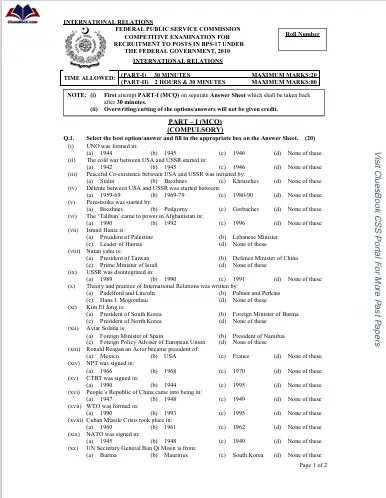
Download IR Past Papers CSS 2010. The CSS International Relations (IR) paper remains one of the most insightful and conceptually demanding optional subjects. The 2010 IR paper focused on the foundations of international theory, global institutions, and Pakistan’s diplomatic and strategic interests. In this post, you’ll find a PDF download of the CSS IR 2010 paper, along with analysis, preparation tips, and useful recommendations to make the most of it.
Why Analyze Past Papers?
Analyzing old papers helps you:
- Detect recurring theoretical and regional questions
- Enhance your essay-writing structure and clarity
- Develop a strategy for time management in exams
- Identify areas where current affairs can be integrated
- Prepare for questions through mock testing
Breakdown of the 2010 IR Paper
The 2010 paper followed the standard CSS format:
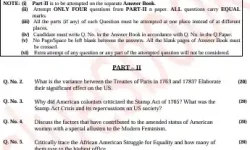
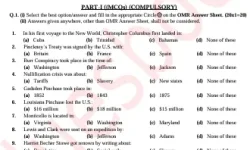
Objective Section (MCQs)
- 20 multiple-choice questions
- Covered topics like:
- IR theories and terminology
- Major wars and global alliances
- Functions of the United Nations
- Treaties and diplomatic history
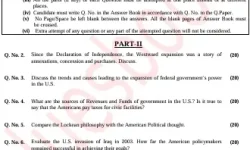
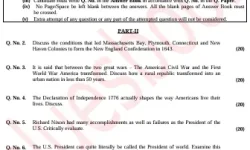
Subjective Section (Essay-Type Questions)
Candidates attempted 4 out of several provided questions. Topics included:
- Role of ideology in international politics
- Collective security and the UN
- Evolution of international relations as a discipline
- Nuclear deterrence and regional balance
- Pakistan’s strategic relationships and challenges
About the CSS
The CSS (Central Superior Services) Competitive Examination is a rigorous federal-level test administered by the Federal Public Service Commission (FPSC) to select candidates for prestigious civil service roles across Pakistan. The exam’s rules and regulations, covering age limits, eligibility, subjects, and quotas, are detailed in the official CSS Rules section on the FPSC’s website.
The CSS Exam Rules, issued by FPSC Pakistan, outline eligibility criteria, age limits (21–30 years), and a maximum of three attempts for candidates. The exam includes written tests, a medical exam, a psychological assessment, and an interview. Rules also define quotas, disqualification grounds, and subject selection for a fair recruitment process.
Key Themes from the 2010 IR Paper
The key focus areas in this paper were:
- IR theory (realism, liberalism, constructivism)
- Diplomatic history and ideological conflicts
- UN’s role in maintaining peace and security
- Nuclear politics in South Asia
- Pakistan’s geopolitical posture
How to Practice with the 2010 Paper
Use this paper to sharpen your preparation by:
- Writing full-length answers with theoretical backing
- Applying real-world examples to classical questions
- Practicing time-bound responses
- Citing relevant scholars and historical references
- Evaluating your performance with peers or mentors
Recommended Books & Study Sources
For thorough coverage of the 2010 paper topics, use:
- Global Politics by Andrew Heywood
- The Globalization of World Politics by Baylis, Smith & Owens
- International Relations by Joshua Goldstein
- Pakistan’s Foreign Policy by Abdul Sattar
- Past paper MCQ collections and solved paper guides
Download Section
Click below to download the Past Papers of International Relations CSS PDF file
- Always align your answers with current affairs and theoretical frameworks.
- Practice writing time-bound answers using past papers.
- Follow key developments in global politics, economic trends, and regional issues, especially in South Asia.
The CSS IR 2010 paper reflects the fundamental aspects of international relations with a balanced mix of theory and applied diplomacy. Reviewing it gives you a deeper understanding of key global issues and Pakistan’s foreign affairs.
It’s especially useful for those seeking to improve answer structure and analytical depth.