
CSS Economics Past Papers
Download CSS Past Papers of Economics 2009. Preparing for the CSS Economics 2009 exam? This blog breaks down Paper I & II using clear bullets, discusses paper structure, core concepts like elasticity and Keynesian theory, and shows how industrial and agricultural policies were tested, perfect for exam strategy!

The CSS Economics Exam 2009, conducted by the Federal Public Service Commission (FPSC), was a balanced mix of micro, macro, and applied economics. It tested both conceptual understanding and policy awareness, ideal for candidates with solid theoretical grounding and Pakistan-specific economic knowledge.
Paper Structure Overview
Economics Paper I
- Total Marks: 100
- Time Allowed: 3 hours
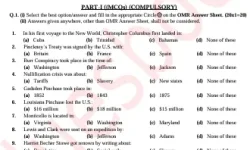
- Part I (MCQs): 20 marks, 20 questions
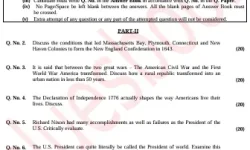
- Part II (Descriptive): 80 marks, 4 long questions
Economics Paper II
- Total Marks: 100
- Time Allowed: 3 hours
- Part I (MCQs): 20 marks
- Part II (Descriptive): 80 marks, 4 long questions
Key Topics in Paper I – Micro and Macro
MCQs Covered
- Utility (Cardinal vs Ordinal)
- Demand elasticity and substitution effect
- Market structures: Monopoly, Perfect Competition
- Cost functions and marginal productivity
- Price elasticity examples and implications
Descriptive Questions Highlights
- Elasticity of Demand – Relationship with price & income
- Market Structures – Comparison of perfect competition vs monopoly
- Keynesian Consumption Function – Example-driven explanation
- Demand for Money – Precautionary, transactional, and speculative
- Consumer Financing – Risks of banking-led personal loans
- Balance of Trade vs Balance of Payments – Conceptual clarity
- Banking System’s Role in Growth – Development link explained
Paper II – Pakistan’s Economy & Policy Focus
MCQs Covered
- GDP vs GNP
- Unemployment types
- Monetary concepts like real interest rate and MPC
- Comparative advantage in trade
- Agricultural productivity and trade terms
Descriptive Questions Highlights
- Agriculture Policy & WTO – Compatibility and impact
- Monetary Policy – Inflation control strategies
- Industrial Sector’s Role – Economic development importance
- External Finance Sources – Focus on remittances and foreign aid
- Agricultural Taxation – Need for tax reforms in rural economy
- Balance of Payments – Pakistan’s trade imbalance critique
- Short Notes (Pick any two):
-
- Transport & Communication
- Privatization
- Energy & Fuel
About the CSS
The CSS (Central Superior Services) Competitive Examination is a rigorous federal-level test administered by the Federal Public Service Commission (FPSC) to select candidates for prestigious civil service roles across Pakistan. The exam’s rules and regulations, covering age limits, eligibility, subjects, and quotas, are detailed in the official CSS Rules section on the FPSC’s website.
The CSS Exam Rules, issued by FPSC Pakistan, outline eligibility criteria, age limits (21–30 years), and a maximum of three attempts for candidates. The exam includes written tests, a medical exam, a psychological assessment, and an interview. Rules also define quotas, disqualification grounds, and subject selection for a fair recruitment process.
How to Prepare Based on This Paper?
- Revise Theory First: Elasticity, cost, competition, Keynesian economics
- Study Pakistan’s Economy: Policies, taxation, agriculture, industrial sector
- Practice MCQs: Build speed and accuracy for conceptual questions
- Link Theory with Practice: Apply models like Keynesian consumption to Pakistan-specific contexts
- Understand Global Institutions: WTO’s role in national policies
CSS Economics Exam 2009 balanced theory and Pakistan’s real economic issues. By preparing both international frameworks and domestic applications, aspirants could perform well.
Reviewing this paper gives insight into recurring themes and question styles in CSS exams.