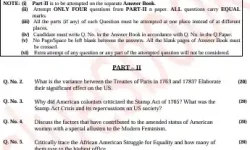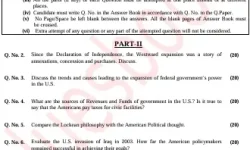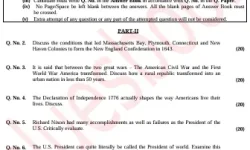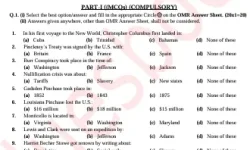

CSS Pakistan Affairs Past Papers
Download CSS Pakistan Affairs Past Papers 2011. The CSS 2011 Pakistan Affairs paper was a turning point, testing crisis management and ideological clarity. Download the original PDF to explore how it challenged candidates on national identity, economic strain, and foreign pressures.
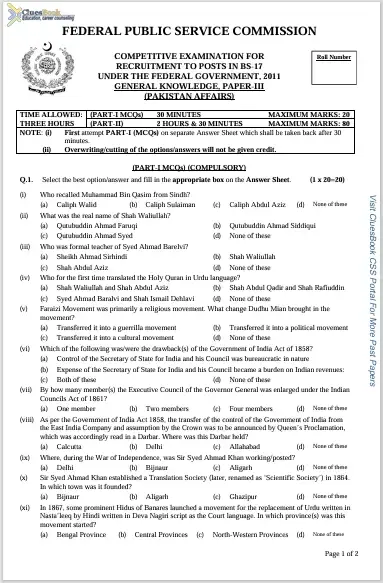
2011 was politically unstable and economically strained. The paper reflected this turbulence; questions were no longer abstract; they asked for grounded, practical thinking. This wasn’t about history alone, but Pakistan’s survival and global posture.
Key Information at a Glance
- Total Marks: 100
- Objective Part: 20 MCQs
- Subjective Part: 7 questions (attempt any 4)
- Time Allowed: 3 hours
The format emphasized both factual clarity and analytical depth.
About the CSS
The CSS (Central Superior Services) Competitive Examination is a rigorous federal level test administered by the Federal Public Service Commission (FPSC) to select candidates for prestigious civil service roles across Pakistan. The exam’s rules and regulations, covering age limits, eligibility, subjects, and quotas, are detailed in the official CSS Rules section on the FPSC’s website.
The CSS Exam Rules, issued by FPSC Pakistan, outline eligibility criteria, age limits (21–30 years), and a maximum of three attempts for candidates. The exam includes written tests, a medical exam, a psychological assessment, and an interview. Rules also define quotas, disqualification grounds, and subject selection for a fair recruitment process.
Major Question Themes in 2011
CSS Pakistan Affairs Past Papers 2011 covered sensitive, high stakes topics linked to Pakistan’s national cohesion:
- Ideological identity and historical roots
- Economic dependency and IMF relations
- Impact of terrorism on national perception
- S. relations and sovereignty concerns
The paper was designed to test realism and balanced argumentation.
What Made This Paper Unique?
The CSS Pakistan Affairs Past Papers 2011 broke predictable patterns. Here’s how:
- Questions linked domestic instability with foreign policy failures
- Examiner demanded cause and effect chains, not isolated facts
- Candidates had to evaluate governance gaps, not just describe them
- Ideology based questions require balanced historical and present analysis
Students who relied only on past papers likely struggled.
Recommended Study Aids
Use sources that offer context and depth:
-
Books
- “Struggle for Pakistan” by Ayesha Jalal
- “Pakistan: Beyond the Crisis State,” edited by Maleeha Lodhi
-
Reports
- International Crisis Group reports on Pakistan
- Pakistan Institute for Peace Studies (PIPS) briefs
-
Government Publications
- Pakistan Economic Survey
- Ministry of Foreign Affairs press releases
Use them to blend opinion with evidence.
Strategic Preparation Tips for Papers Like 2011
To tackle such papers effectively, preparation must be smart, not just wide:
- Focus on conceptual clarity, not just events
- Practice writing multi perspective answers
- Read weekly journals for evolving narratives (e.g., Herald, Dawn editorials)
- Build a timeline of Pakistan’s economic and diplomatic events post-2001
This is how toppers navigate uncertainty in CSS papers.
Download Section
You can download the original CSS Pakistan Affairs Past Papers 2011 (PDF) from the download link mentioned below in the post. It’s the unsolved version and formatted for time based preparation and analytical drills. The CSS Pakistan Affairs 2011 paper stood out for its realism. It pushed candidates to connect ideology with governance, and internal challenges with international consequences.
Those who excelled didn’t just write, they evaluated, weighed, and resolved. Practice this skill, not just facts.