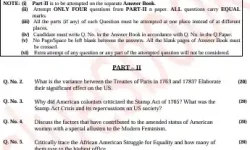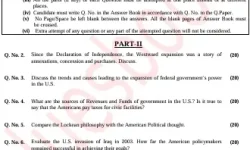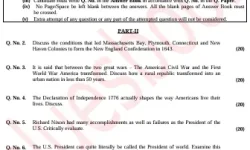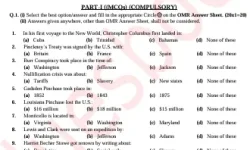

Download governance and public policy CSS paper 2018 PDF with detailed analysis, structure, core focus areas, examiner’s insights, candidate challenges, and preparation guidance. Includes FAQs, suggested readings, and PDF download for practice.

Paper Highlights
The 2018 paper was widely described as a concept-oriented exam. It focused on testing aspirants’ understanding of governance theories, policy models, and institutional frameworks rather than Pakistan-specific case studies.
- Marks: 100
- Time Allowed: 3 hours
- Part I (MCQs): 20 marks
- Part II (Descriptive): 80 marks (6 questions, attempt 4)
About the CSS
The CSS (Central Superior Services) Competitive Examination is a rigorous federal-level test administered by the Federal Public Service Commission (FPSC) to select candidates for prestigious civil service roles across Pakistan. The exam’s rules and regulations, covering age limits, eligibility, subjects, and quotas, are detailed in the official CSS Rules section on the FPSC’s website.
The CSS Exam Rules, issued by FPSC Pakistan, outline eligibility criteria, age limits (21–30 years), and a maximum of three attempts for candidates. The exam includes written tests, a medical exam, a psychological assessment, and an interview. Rules also define quotas, disqualification grounds, and subject selection for a fair recruitment process.
Dominant Areas of the 2018 Paper
Governance Theories
The exam tested familiarity with models such as:
- Classical Governance
- Good Governance approach (World Bank model)
- New Public Management (NPM)
Policy Formulation & Implementation
Questions targeted the policy cycle, asking candidates to explain how policies are framed, adopted, and executed in public sector settings.
Accountability and Transparency
Candidates were expected to discuss institutional frameworks for accountability (e.g., ombudsman, courts, parliamentary committees).
Role of International Institutions
The paper included themes about global governance actors such as UN, IMF, and World Bank, and their influence on Pakistan’s policy choices.
How the Examiner Designed It
The examiner clearly wanted to assess conceptual strength. Instead of focusing heavily on Pakistan, the questions pushed candidates to:
- Demonstrate clarity of definitions
- Relate governance theories to modern administrative practices
- Compare traditional vs modern governance approaches
- Show awareness of international policy trends
Where Candidates Struggled
Lack of Conceptual Depth
Many students memorized superficial definitions but could not explain models like NPM in detail.
Weak Comparative Analysis
Instead of contrasting theories (e.g., old bureaucracy vs NPM), candidates simply described them.
Insufficient Global Perspective
Some ignored global governance entirely, losing marks in comparative questions.
What This Paper Teaches Us
- Unlike later years (2019–2023), 2018 was dominated by theoretical clarity rather than applied policy analysis.
- Well-organized answers with headings, subheadings, and examples had higher chances of scoring well.
- Candidates who connected Pakistan’s policies with international governance trends gained a visible edge.
Preparation Strategy for Similar Papers
- Build conceptual strength first through books and lecture notes.
- Make short notes on major governance theories and their features.
- Study comparative governance practices (Western vs developing nations).
- Keep updated with UNDP, IMF, and World Bank reports for examples.
Suggested Readings
- Governance and Public Policies in Pakistan, Dr. Sultan Khan
- Public Policy: A Conceptual Framework, B. Guy Peters
- Theories of Governance, Mark Bevir
- UNDP Human Development Reports
Download Governance and Public Policy CSS Paper 2018 PDF
You can download the original CSS Governance & Public Policies 2018 Paper (PDF) from our official website. Visit cluesbook for more CSS related material. It is unsolved and formatted for candidate practice. The CSS 2018 paper was a conceptual challenge. It rewarded candidates who had clear command of governance theories and punished those relying only on current affairs examples.
It stands out as one of the most theory-heavy papers in recent years, laying the groundwork for the examiner’s shift toward applied analysis in 2019.