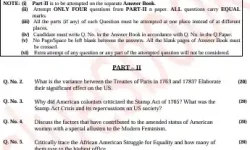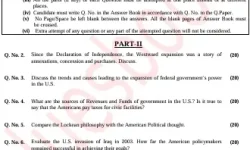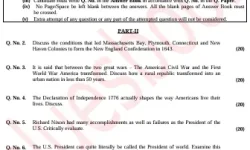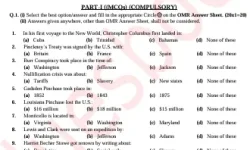

Download Past Papers of History of Pakistan & India CSS 2020 PDF with exam pattern, historical topics, examiner insights, and preparation strategy. Access the original paper in PDF form from the link given below.
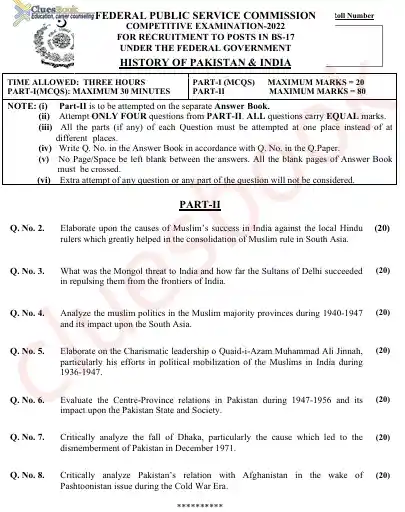
The CSS 2020 History of Pakistan and India paper was strategically framed to balance medieval Indian history with the political and ideological journey leading to Pakistan. Students had to blend factual understanding with critical evaluation to score well.
Exam Orientation
In 2020, the exam leaned heavily on both early Muslim rule in India and the transformation during the British period. This shows the FPSC examiner’s intent to test chronological continuity and cause-effect analysis.
Past Papers of History of Pakistan & India CSS
This section reflects the original paper’s scope, highlighting the mix of descriptive and analytical questions that demanded strong historical command and clarity of argument.
Question Paper Pattern
| Section | Focus Areas | Style of Questions |
| Early Muslim India | Ghaznavids, Delhi Sultanate | Rise, policies, decline |
| Mughal Empire | Akbar, Aurangzeb, decline | Governance and religious policies |
| British Colonial Rule | East India Company, British Raj | Economic and administrative impacts |
| Pakistan Movement | Ideology, partition struggle | Leadership, Muslim identity |
Key Themes Highlighted
- Foundation of Muslim power in the subcontinent
- Mughal achievements and reasons for collapse
- British exploitation and socio-political changes
- Evolution of Muslim nationalism and Pakistan Movement
Evaluator’s Perspective
The examiner expected:
- Strong chronological understanding
- Critical reasoning, not mere narration
- Ability to interlink events with Pakistan’s creation
- Use of historical evidence for justification
Download Past Papers of History of Pakistan & India CSS 2020 PDF
Aspirants can access the original CSS Past Papers History of Pakistan & India 2020 in PDF format. The authentic question paper is available through the link given below to help candidates practice with real exam structure. The 2020 paper appeared moderately challenging, as it required a balance of memorization and logical structuring.
Candidates with analytical preparation found it manageable, while rote learners struggled with argument development.