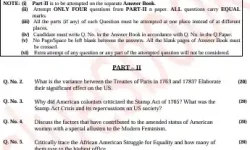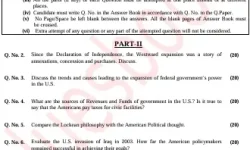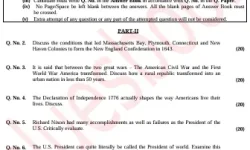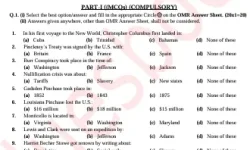

Download CSS Past Papers European History 2019 PDF with a full breakdown of question types, topic coverage, preparation tips, and downloadable resources. Includes tables for paper structure and theme comparison.
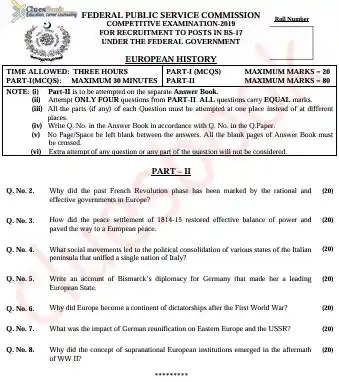
The CSS past papers European History 2019 provided aspirants with a well-balanced set of questions ranging from revolutions and political reforms to modern European developments. Unlike many previous years, the 2019 paper placed greater weight on critical interpretation and comparisons rather than simple narration. Analyzing this paper is key for understanding examiner trends and preparing effectively for future exams.
About the CSS
The CSS (Central Superior Services) Competitive Examination is a rigorous federal-level test administered by the Federal Public Service Commission (FPSC) to select candidates for prestigious civil service roles across Pakistan. The exam’s rules and regulations, covering age limits, eligibility, subjects, and quotas, are detailed in the official CSS Rules section on the FPSC’s website.
The CSS Exam Rules, issued by FPSC Pakistan, outline eligibility criteria, age limits (21–30 years), and a maximum of three attempts for candidates. The exam includes written tests, a medical exam, a psychological assessment, and an interview. Rules also define quotas, disqualification grounds, and subject selection for a fair recruitment process.
Question Paper Format
Like other years, the European History CSS paper 2019 was divided into two parts:
| Section | Content Type | Marks |
| Part I (MCQs) | 20 questions on dates, treaties, leaders | 20 |
| Part II (Long Qs) | Six descriptive questions (attempt any 4) | 80 |
This design ensured that candidates needed both factual memory and strong analytical skills.
Subject Focus in CSS Past Papers European History 2019 PDF
The CSS European History exam 2019 covered a wide range of historical events. Key areas included:
- The French Revolution and its long-term influence.
- Napoleon’s reforms and European wars.
- The Vienna Settlement and balance of power.
- German and Italian unification through diplomacy and war.
- The impact of industrial and social revolutions in Europe.
- Cold War rivalries and European integration.
Comparative Topic Analysis (2018 vs 2019)
| Theme | Asked in 2018 | Asked in 2019 | Nature of Question |
| French Revolution | Yes | Yes | Analytical (causes & consequences) |
| Napoleon Bonaparte | Yes | Yes | Reforms & downfall |
| Congress of Vienna | No | Yes | European balance of power |
| Unification of Germany | Yes | Yes | Role of Bismarck |
| Unification of Italy | Yes | Yes | Leadership & diplomacy |
| World Wars | Yes | Yes | Causes and aftermath |
| Cold War Europe | No | Yes | Ideological & political impacts |
This comparison shows that the European History CSS previous papers often repeat core topics but with a fresh analytical approach.
Practice Resource
You can download the CSS European History past paper 2019 (PDF) from the present above and below the article. It is unsolved and arranged for practice purposes, helping aspirants evaluate their preparation level.
Examiner’s Inclination
The CSS optional subject European History 2019 reflected the examiner’s interest in:
- Evaluating leaders vs. movements (e.g., Napoleon vs. collective forces).
- Testing comparative historical developments like unifications.
- Linking domestic reforms with international consequences.
- Encouraging critical thinking over rote learning.
Preparation Approach for Future Exams
To succeed in CSS European History exam preparation, candidates should:
- Study timelines and maps to strengthen factual recall.
- Practice comparative essays to match examiner style.
- Add historians’ viewpoints for higher-quality answers.
- Solve CSS European History previous year questions for pattern recognition.
The CSS past papers European History 2019 demonstrate that the examiner values analytical clarity, well-structured arguments, and contextual understanding of events. Aspirants should combine factual details with critical perspectives for maximum marks.
By reviewing CSS European History exam paper analysis regularly, candidates can prepare smarter and score higher.