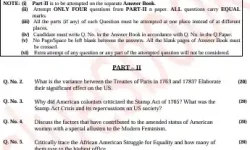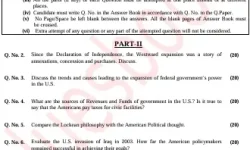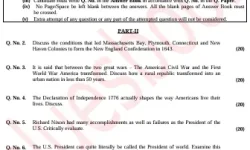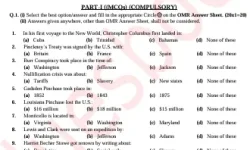

Download CSS Past Papers of European History 2015 PDF with complete details. Explore question style, paper highlights, key areas of focus, and preparation strategy with helpful tables.
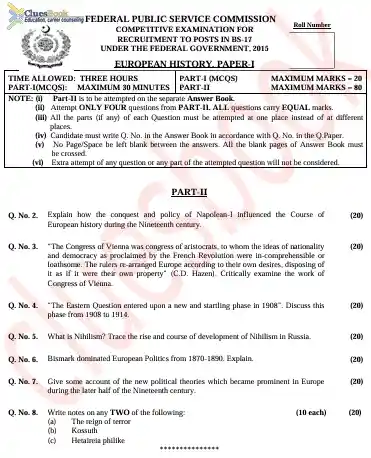
The European History CSS Past Paper 2015 is a valuable guide for aspirants aiming to perform well in the history optional subject. This paper challenged students to demonstrate not only factual recall but also interpretive skills. Studying it allows candidates to understand examiner priorities and recurring historical themes.
Major Segments of the CSS Past Papers of European History 2015 PDF
Unlike other years, the 2015 paper presented a balanced blend of descriptive and analytical questions. The examiner emphasized:
- Intellectual and cultural history of Europe.
- Transformative revolutions and their consequences.
- The emergence of nationalism and liberalism.
- Twentieth-century conflicts shaping modern Europe.
About the CSS
The CSS (Central Superior Services) Competitive Examination is a rigorous federal-level test administered by the Federal Public Service Commission (FPSC) to select candidates for prestigious civil service roles across Pakistan. The exam’s rules and regulations, covering age limits, eligibility, subjects, and quotas, are detailed in the official CSS Rules section on the FPSC’s website.
The CSS Exam Rules, issued by FPSC Pakistan, outline eligibility criteria, age limits (21–30 years), and a maximum of three attempts for candidates. The exam includes written tests, a medical exam, a psychological assessment, and an interview. Rules also define quotas, disqualification grounds, and subject selection for a fair recruitment process.
Division of the 2015 European History Paper
| Section | Coverage | Type of Questions | Relevance |
| Part A | Renaissance, Humanism, Reformation | Descriptive & Short Essays | High |
| Part B | French Revolution, Napoleon, Vienna Settlement | Analytical & Comparative | Very High |
| Part C | Industrialization, Socialism, 19th Century Nationalism | Long Essays | High |
| Part D | World War I, World War II, Cold War | Analytical & Cause-Effect | Very High |
Distinctive Features of 2015 Paper
The paper was distinct because it tested deeper linkages between political, cultural, and social changes. Aspirants had to analyze:
- How intellectual movements reshaped European thought.
- The relationship between revolutions and nationalism.
- The long-term influence of wars on European integration.
Resource Section
You can download the CSS European History Past Paper 2015 (PDF) from the link below. It is provided in an unsolved format for practice purposes.
Key Topics Candidates Should Revise
| Era | Must-Prepare Topics | Notes |
| Early Modern Europe | Renaissance, Reformation, Enlightenment | Conceptual clarity needed |
| Revolutionary Age | French Revolution, Napoleon | Focus on cause and effects |
| Industrial Europe | Socialism, Nationalism, Unification of Germany & Italy | Link economic change with politics |
| Modern Europe | World Wars, League of Nations, Cold War | Emphasize diplomacy and alliances |
Preparation Insights
For aspirants using this paper as practice, the best strategy is to:
- Combine chronological knowledge with thematic analysis.
- Develop comparisons between revolutions, wars, and reforms.
- Use maps and timelines during preparation to remember transitions clearly.
- Practice writing long structured essays to match CSS standards.
The CSS European History Past Paper 2015 shows how the examiner aimed to test both historical detail and critical understanding.
By focusing on recurring themes like revolutions, nationalism, and wars, aspirants can better align their preparation with examiner expectations.