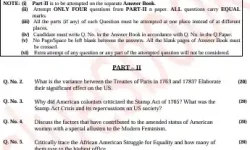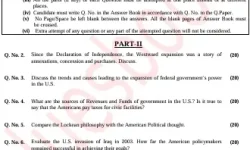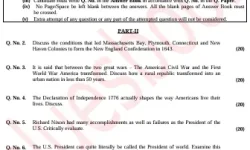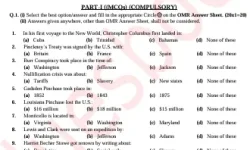

Download CSS Past Papers European History 2014 PDF with complete details. Learn about paper outline, central themes, examiner’s preferences, and preparation guidelines for better results.
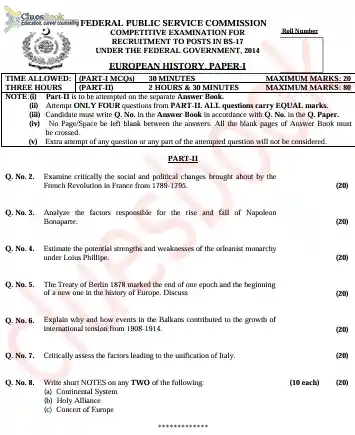
The European History CSS Past Paper 2014 stands out as a key resource for CSS candidates who selected this optional subject. It demanded not just memorization of events but also a clear analytical approach. The paper pushed aspirants to demonstrate their understanding of political, social, and intellectual changes in Europe over centuries.
Paper Format Overview
The 2014 paper reflected a clear intention to test multiple dimensions of European history. Candidates were expected to:
- Explain historical events with cause-effect clarity.
- Compare different movements and revolutions.
- Assess the contribution of leaders and ideologies.
- Write well-structured, argument-based answers.
About the CSS
The CSS (Central Superior Services) Competitive Examination is a rigorous federal-level test administered by the Federal Public Service Commission (FPSC) to select candidates for prestigious civil service roles across Pakistan. The exam’s rules and regulations, covering age limits, eligibility, subjects, and quotas, are detailed in the official CSS Rules section on the FPSC’s website.
The CSS Exam Rules, issued by FPSC Pakistan, outline eligibility criteria, age limits (21–30 years), and a maximum of three attempts for candidates. The exam includes written tests, a medical exam, a psychological assessment, and an interview. Rules also define quotas, disqualification grounds, and subject selection for a fair recruitment process.
Key Areas of Focus in 2014
The most dominant topics in the 2014 European History paper included:
- The cultural revival of Europe during the Renaissance.
- The long-term effects of the Reformation.
- The French Revolution and Napoleon’s role.
- Growth of nationalism in 19th-century Europe.
- The political and social consequences of World War I.
CSS Past Papers European History 2014 – Examiner’s Priorities
The paper highlighted the examiner’s preference for:
- Critical analysis: Students were required to evaluate impacts rather than narrate plain events.
- Comparative knowledge: Linking revolutions, ideologies, and wars across centuries.
- Broader connections: Relating intellectual history with political transformation.
Preparation Advice for Aspirants
To approach a paper like 2014, candidates should:
- Build a timeline of events from Renaissance to modern Europe.
- Practice writing comparative essays between revolutions and wars.
- Focus on leadership roles, such as Napoleon, Bismarck, and Churchill.
- Strengthen conceptual clarity on movements like socialism, liberalism, and nationalism.
Download CSS Past Papers European History 2014
You can download the CSS European History Past Paper 2014 (PDF) in unsolved format from the link below. It is formatted to assist with practice and revision. The CSS European History Past Paper 2014 is a reminder that this subject requires both depth of knowledge and sharp analytical skills.
Aspirants must go beyond surface-level facts and develop the ability to connect themes across centuries for success in the CSS examination.