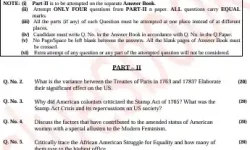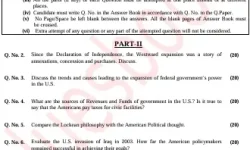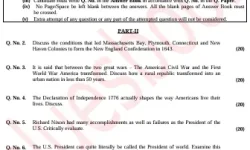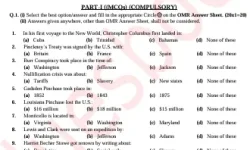

Download the CSS Past Papers of History of Pakistan and India 2014 PDF with complete paper structure, key themes, and examiner’s intent. A valuable resource for CSS aspirants to practice and understand the exam trend.
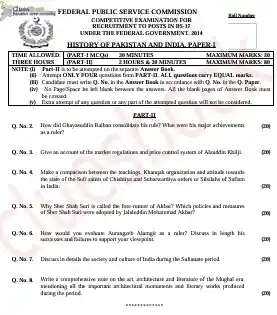
The CSS History of Pakistan and India Paper 2014 provided candidates with an opportunity to demonstrate not only their factual knowledge but also their ability to interpret historical trends. The questions highlighted continuity and change in the subcontinent’s history, from the Mughal era to the struggle for Pakistan. Aspirants were tested on critical analysis, balanced judgment, and conceptual clarity rather than mere memorization.
Paper Design Insights
The 2014 paper was structured to balance both political and socio-economic history. Candidates faced questions on rulers, reforms, colonial influence, and freedom movements. This approach encouraged aspirants to link causes with consequences.
Key Features of the Paper
- Questions included short and long analytical topics
- Historical personalities were emphasized
- Economic and social changes were highlighted
- Focus remained on continuity of events across centuries
CSS Past Papers of History of Pakistan and India 2014 – Core Themes
- Decline of the Mughal Empire
- Socio-economic effects of British rule
- Muslim reformist movements
- Educational and cultural awakening of Muslims
- Political developments leading to the Pakistan Movement
About the CSS
The CSS (Central Superior Services) Competitive Examination is a rigorous federal-level test administered by the Federal Public Service Commission (FPSC) to select candidates for prestigious civil service roles across Pakistan. The exam’s rules and regulations, covering age limits, eligibility, subjects, and quotas, are detailed in the official CSS Rules section on the FPSC’s website.
The CSS Exam Rules, issued by FPSC Pakistan, outline eligibility criteria, age limits (21–30 years), and a maximum of three attempts for candidates. The exam includes written tests, a medical exam, a psychological assessment, and an interview. Rules also define quotas, disqualification grounds, and subject selection for a fair recruitment process.
Examiner’s Expectations
The examiner stressed clarity of expression, strong arguments, and relevant examples. Students who supported their answers with maps, historical dates, and references to events were able to score better.
Recommended Preparation Approach
- Study past 10 years’ papers for repeated topics
- Prepare concise notes on reform movements and political leaders
- Practice writing essays with introductions and conclusions
- Strengthen analytical ability through comparative study of eras
Common Mistakes by Aspirants
- Over-reliance on rote learning without analysis
- Neglecting social and cultural aspects of history
- Weak presentation and lack of headings in answers
- Ignoring timeline connections between major events
Strategy for High Scores
- Integrate historical evidence in arguments
- Use chronological flow to maintain clarity
- Cover both causes and impacts of each event
- Include the role of thinkers and poets in the struggle for freedom
Download CSS Past Papers of History of Pakistan and India 2014
For aspirants who wish to review the paper in its original format, the complete CSS History of Pakistan and India 2014 paper is available. Going through the original source helps you understand the exact wording, question style, and time management strategy required in the exam. It is highly recommended to practice by writing answers within the given time frame after reviewing the paper. You can download the original CSS 2014 History of Pakistan and India Paper (PDF) from the link below.
It is unsolved and formatted for practice purposes, making it ideal for exam preparation.