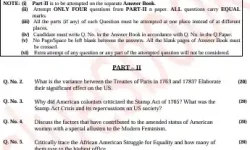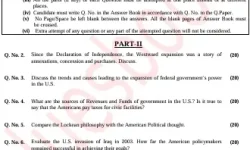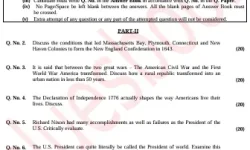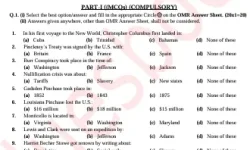

Download CSS governance and public policy paper 2017 PDF with in-depth analysis, highlighted concepts, candidate challenges, and preparation guidance.
Setting the Scene: Governance in 2017
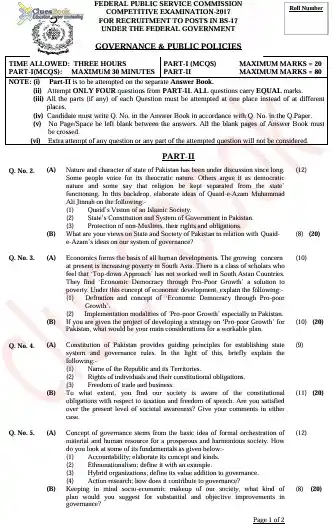
The 2017 paper in Governance & Public Policies reflected a period when governance debates in Pakistan were dominated by institutional reforms, corruption scandals, and global governance influences. The exam paper mirrored this context, requiring students to balance theoretical understanding with real-world policy application.
What the Paper Looked Like
The structure of the exam was familiar but the weight leaned towards analytical writing instead of rote knowledge:
- 20 marks reserved for MCQs (concepts, definitions, policy tools).
- 80 marks descriptive (long answers with emphasis on evaluation and critique).
The questions challenged aspirants to apply concepts of good governance, policy implementation, and accountability systems directly to Pakistan’s circumstances.
About the CSS
The CSS (Central Superior Services) Competitive Examination is a rigorous federal-level test administered by the Federal Public Service Commission (FPSC) to select candidates for prestigious civil service roles across Pakistan. The exam’s rules and regulations, covering age limits, eligibility, subjects, and quotas, are detailed in the official CSS Rules section on the FPSC’s website.
The CSS Exam Rules, issued by FPSC Pakistan, outline eligibility criteria, age limits (21–30 years), and a maximum of three attempts for candidates. The exam includes written tests, a medical exam, a psychological assessment, and an interview. Rules also define quotas, disqualification grounds, and subject selection for a fair recruitment process.
Theme of CSS Governance and Public Policy Paper 2017
Instead of scattering across too many ideas, the 2017 paper revolved around four central themes:
- Institutional Reform: bureaucracy, judiciary, and parliamentary committees.
- Public Policy Process: agenda setting, decision-making, and policy adoption.
- Transparency and Accountability: fight against corruption, role of watchdogs.
- Global Governance Pressures: IMF programs, World Bank recommendations, UN goals.
Candidate Experience and Examiner’s Expectation
Many candidates noted that this paper was concept-heavy but context-driven. The examiner seemed to reward:
- Linking theory to current national issues.
- Presenting answers with clear comparisons and logical flow.
- Using examples from Pakistan’s governance practices, rather than generic responses.
Weak answers tended to list definitions without connecting them to governance challenges in Pakistan.
Where Aspirants Struggled
Some common difficulties included:
- Limited knowledge of public policy cycle stages.
- Failure to critically assess institutional weaknesses.
- Over-dependence on memorized good governance definitions.
This highlighted the need for both conceptual depth and practical knowledge.
Strategy for Better Preparation
The 2017 exam shows that aspirants should:
- Develop a balanced preparation plan (theory + case studies).
- Practice writing evaluative answers with both positive and negative dimensions.
- Strengthen knowledge about Pakistan-specific governance reforms.
- Stay updated with international development policies and their local implications.
Useful Readings for 2017-Style Papers
- Public Policy Analysis, William N. Dunn
- Governance in Pakistan: Challenges & Reforms, Ishrat Husain
- UNDP Pakistan governance reports
- World Bank and IMF country reports on Pakistan
This paper stands as an example of how CSS governance exams combine theory with applied knowledge. Candidates who demonstrated a strong grip on policy processes, reform needs, and accountability systems managed to perform better.
It reinforced the idea that Governance & Public Policies is not just a theoretical subject but a policy-oriented field requiring critical analysis.