
CSS Past Papers
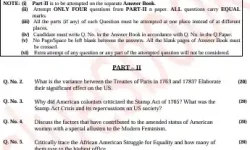
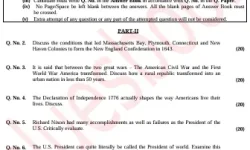
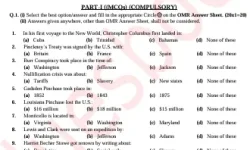
Download Statistics CSS Past Papers 2012 and Get a clear overview of the with solved examples to help you prepare effectively. Download the full PDF for a complete study resource on Statistics CSS 2012 Past Papers.

Statistics Past Papers CSS 2012: Complete Guide and PDF Download
Preparing for the CSS exam requires strong practice with past papers, especially for subjects like Statistics where application matters a lot. The Statistics past papers CSS 2012 provide a valuable resource to understand the exam pattern, types of questions asked, and key areas to focus on.
In this blog post, you will find a detailed overview of the 2012 Statistics CSS paper, important question types, and how to make the best use of the provided PDF download.
Why Use CSS Past Papers?
- Understand Question Patterns: Past papers show what style and complexity of questions the examiners prefer.
- Practice Time Management: Solve questions within time to simulate actual exam conditions.
- Identify Important Topics: Repeated concepts and questions highlight high-weight areas.
- Self-assessment: Check your answers against model solutions to gauge your preparation level.
Overview of Statistics CSS 2012 Paper
The CSS 2012 Statistics paper tests candidates on fundamental and advanced statistical concepts, including:
- Descriptive statistics
- Probability theory
- Sampling and hypothesis testing
- Regression and correlation analysis
- Time series and index numbers
The questions mix theory with numerical problems, requiring both conceptual understanding and computational skills.
Sample Question from Statistics CSS 2012 Paper
Example:
“A sample of 50 students was taken to study their marks in mathematics and physics. The correlation coefficient between the marks in two subjects was found to be 0.85. Interpret this value and explain its significance.”
Answer:
The correlation coefficient of 0.85 indicates a strong positive linear relationship between mathematics and physics marks. It means students scoring high in mathematics tend to score high in physics as well.
How to Use the Provided PDF File
- Download the PDF to access the full 2012 Statistics CSS paper along with solutions.
- Review each question carefully and try solving it on your own before looking at the answers.
- Focus on understanding the method used to solve numerical problems.
- Revise formulas and theory related to each question for better retention.
- Use the paper as a benchmark to evaluate your progress regularly.
Tips for Preparing Statistics for CSS
- Start with basic statistical concepts and formulas.
- Practice numerical questions regularly.
- Use past papers like CSS 2012 for realistic practice.
- Study solved examples to clarify difficult problems.
- Manage your time efficiently during practice sessions.
About the CSS
The CSS (Central Superior Services) Competitive Examination is a rigorous federal level test administered by the Federal Public Service Commission (FPSC) to select candidates for prestigious civil service roles across Pakistan. The exam’s rules and regulations, covering age limits, eligibility, subjects, and quotas, are detailed in the official CSS Rules section on the FPSC’s website.
The CSS Exam Rules, issued by FPSC Pakistan, outline eligibility criteria, age limits (21–30 years), and a maximum of three attempts for candidates. The exam includes written tests, a medical exam, a psychological assessment, and an interview. Rules also define quotas, disqualification grounds, and subject selection for a fair recruitment process.
Download Link
You can download the complete Statistics CSS past papers 2012 PDF here for free to enhance your exam preparation. Regular practice with these papers will help you manage time effectively and deepen your understanding of key statistical concepts, paving the way for success in your CSS Statistics exam.
Practice smart and use the Statistics past papers CSS 2012 to sharpen your skills and boost your confidence for the exam.