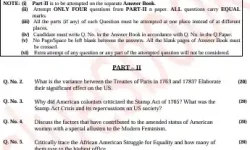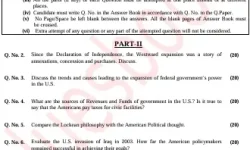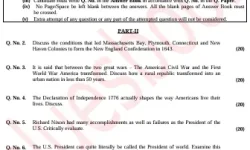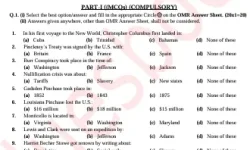

Download CSS Past Papers Islamic History and Culture 2020 PDF. Understand key themes, exam strategies, recommended resources, and focused study tips for CSS aspirants.
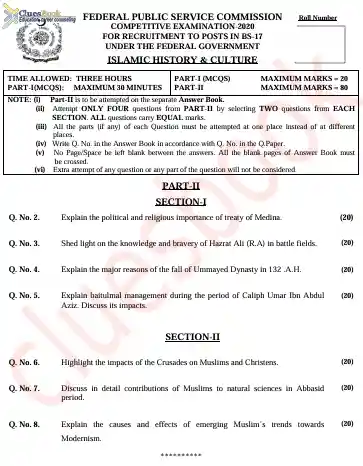
Introduction to Islamic History and Culture in CSS 2020
The Islamic History and Culture paper in the CSS exam covers the rich history, philosophy, and contributions of Islamic civilizations. In 2020, the exam increasingly focused on the modern challenges faced by Islamic societies, the political evolution of the Muslim world, and its cultural developments. Aspirants were asked to analyze both historical facts and contemporary issues in Islamic societies.
CSS Past Papers Islamic History and Culture 2020
In 2020, the Islamic History and Culture paper examined candidates’ understanding of:
- Historical Developments: Rise of Islam, key caliphates, the role of Islamic empires, and their impact.
- Cultural Contributions: Islamic civilization’s achievements in literature, science, and philosophy during the Golden Age.
- Modern Issues: The decline of empires, the impact of colonialism, the political transformation in the Muslim world, and contemporary challenges.
- Theological and Philosophical Movements: Key Islamic thinkers and their influence on modern Islamic thought.
Key topics drawn from the 2020 paper included:
- The Mughal Empire: Its role in shaping Islamic civilization and culture.
- Islamic Modernism: Responses to Western colonialism, the rise of Islamic reform movements.
- Post-Colonialism: Challenges faced by Muslim-majority countries post-independence, including political instability and the rise of extremism.
Key Insights from the 2020 Paper
The 2020 exam of Islamic History and Culture placed significant focus on the modern era of Islamic history. Candidates were required to:
- Analyze contemporary challenges faced by Islamic societies, especially political instability, extremism, and responses to Western imperialism.
- Understand Islamic reform movements in the 19th and 20th centuries.
- Explore the rise of Islamic modernism, including thinkers like Jamal al-Din al-Afghani and Muhammad Iqbal.
- Discuss post-colonial history, including the political trajectories of Muslim-majority nations.
This focus on modern challenges reflects the changing trends in the CSS exam, demanding a broader understanding of both historical context and current issues.
Study Strategies for Islamic History and Culture 2020
Here’s a strategy guide for effectively preparing for the CSS Islamic History and Culture 2020 paper:
| Strategy Area | Recommended Approach |
| Historical Overview | Study the timeline from the rise of Islam to modern Islamic reform movements. |
| Focus on Modern Issues | Dedicate significant time to understanding contemporary challenges and responses in the Islamic world. |
| Islamic Thinkers | Read works of modern Islamic thinkers like Iqbal, al-Afghani, and Abul Ala Maududi. |
| Past Paper Analysis | Solve past papers from 2010–2020 to understand evolving question trends. |
| Essays and Discussions |
Prepare essays on topics like Islamic Modernism, the legacy of colonialism, and the challenges of the Muslim world in the 21st century. |
About the CSS
The CSS (Central Superior Services) Competitive Examination is a rigorous federal-level test administered by the Federal Public Service Commission (FPSC) to select candidates for prestigious civil service roles across Pakistan. The exam’s rules and regulations, covering age limits, eligibility, subjects, and quotas, are detailed in the official CSS Rules section on the FPSC’s website.
The CSS Exam Rules, issued by FPSC Pakistan, outline eligibility criteria, age limits (21–30 years), and a maximum of three attempts for candidates. The exam includes written tests, a medical exam, a psychological assessment, and an interview. Rules also define quotas, disqualification grounds, and subject selection for a fair recruitment process.
Recommended Resources for 2020 Paper
For in-depth preparation, refer to the following books and resources:
- The History of Islam by Ameer Ali
- Islamic History: A Survey of the Development of the Islamic World by M. H. Zubair
- Islamic Civilization: Its Foundations and Achievements by Aziz al-Azmeh
- The Islamic World by Peter Mansfield
- Islamic Modernism in India and Pakistan by M. Naeem Qureshi
These resources will help you grasp both the historical foundation and modern evolution of Islamic civilizations.
Timeline of Key Events in Islamic History
| Period | Key Focus in CSS 2020 Paper |
| 7th Century – Rise of Islam | Early Islamic state formation, the Rashidun and Umayyad Caliphates. |
| Golden Age (8th–13th Century) | Scientific, philosophical, and cultural achievements of Islamic civilization. |
| Mughal Empire (1526–1857) | Contributions of the Mughal empire to art, architecture, and Islamic culture. |
| Colonial Era (19th–20th Century) | The impact of Western colonialism on Islamic societies and the rise of Islamic reform movements. |
| Modern Islamic World (20th–21st Century) | Political instability, the rise of extremism, and responses to modern challenges. |
This table gives an overview of the key periods and events that the 2020 exam emphasized, showing the evolution of Islamic civilization in a historical context.
Download Islamic History and Culture CSS Past Papers 2020
You can download the CSS Islamic History and Culture 2020 past papers (PDF) from the link below. These unsolved papers are great for practice. The CSS Islamic history and Culture 2020 paper required candidates to blend historical knowledge with an understanding of contemporary challenges faced by the Muslim world.
By following the strategies provided in this blog and focusing on modern themes, you can strengthen your preparation and approach the exam with confidence.