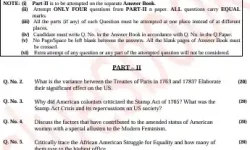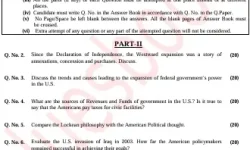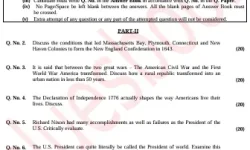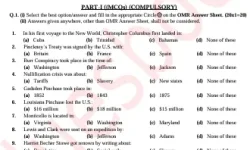

Explore the Islamic History and Culture CSS Past Papers 2019. Learn key exam themes, structure, preparation strategies, and how this paper differs from previous years.
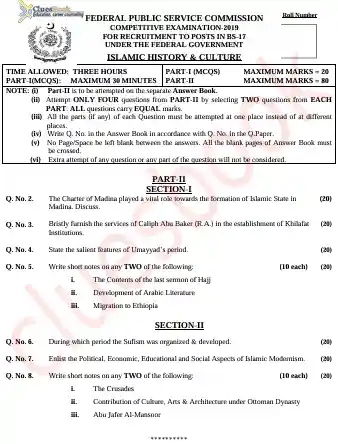
The Islamic History and Culture CSS 2019 paper was designed to test a candidate’s understanding of both classical and modern Islamic history. The exam included questions on early Islamic history, the golden age of Islamic civilization, major empires, and contemporary issues faced by Muslim-majority countries. The 2019 exam also placed significant emphasis on Islamic reform movements and modern political challenges.
Structure of the Islamic History and Culture Exam Paper
The structure of the 2019 CSS Islamic History and Culture paper was as follows:
- Section 1: 100 marks focusing on historical events, empire-building, and contributions from various periods in Islamic history.
- Section 2: 50 marks testing candidates’ knowledge of modern Islamic issues, including Islamic reform movements and post-colonial political developments.
- Candidates were expected to write concise answers and make clear connections between the historical events and their contemporary relevance.
Islamic History and Culture CSS Past Papers 2019: Structure
The 2019 paper was divided into two sections:
- Historical Overview: Focused on key events, caliphates, and empires from the early Islamic period to modern times.
- Contemporary Islamic Issues: Explored the modern challenges faced by Islamic societies, including colonial legacies and post-colonial political instability.
About the CSS
The CSS (Central Superior Services) Competitive Examination is a rigorous federal-level test administered by the Federal Public Service Commission (FPSC) to select candidates for prestigious civil service roles across Pakistan. The exam’s rules and regulations, covering age limits, eligibility, subjects, and quotas, are detailed in the official CSS Rules section on the FPSC’s website.
The CSS Exam Rules, issued by FPSC Pakistan, outline eligibility criteria, age limits (21–30 years), and a maximum of three attempts for candidates. The exam includes written tests, a medical exam, a psychological assessment, and an interview. Rules also define quotas, disqualification grounds, and subject selection for a fair recruitment process.
Key Themes in 2019 Exam
The 2019 CSS paper covered the following key themes:
- Rise of Islam: Early Islamic history, including the Rashidun Caliphate and the expansion of Islam.
- Golden Age of Islam: Contributions to science, culture, and philosophy during the Abbasid Caliphate.
- Islamic Empires: Focused on the Ottoman, Safavid, and Mughal empires and their impact on global history.
- Islamic Modernism and Reform: Examined thinkers like Jamal al-Din al-Afghani and Muhammad Iqbal and their responses to colonialism and modernity.
- Post-Colonial Islamic World: The political evolution of Muslim-majority countries after colonialism, with a focus on political instability and Islamic revivalism.
How 2019 Paper Differs from Previous Years
Compared to earlier years, the 2019 CSS Islamic History and Culture paper emphasized modern issues more than ever.
- Modern Islamic Thought: There was a stronger focus on Islamic philosophers and thinkers who responded to colonialism and Western ideas.
- Contemporary Challenges: Issues like political instability and extremism were given more weight, reflecting the current socio-political climate in many Muslim-majority countries.
- Less Emphasis on Pure Factual Knowledge: The 2019 exam moved away from rote memorization and focused more on analytical skills and the ability to connect historical events to modern issues.
Preparation Strategies for CSS 2019 Paper
To excel in the CSS Islamic History and Culture 2019 exam, follow these strategies:
- Study Key Historical Events: Focus on major Islamic empires, the Golden Age of Islam, and the impact of Islamic philosophers.
- Understand Modern Islamic Thought: Study key reformers like Muhammad Iqbal, Jamal al-Din al-Afghani, and Sayyid Qutb.
- Link History with Modern Issues: Understand how historical events led to modern challenges like extremism, political instability, and colonial legacies.
- Practice Writing Analytical Answers: Avoid purely descriptive answers. Instead, practice writing answers that analyze the causes and effects of historical events.
Download Islamic History and Culture CSS Past Papers 2019
The Islamic History and Culture CSS Past Papers 2019 required a balanced approach to both historical knowledge and modern political issues. You can download the original paper from the link below. The focus on Islamic thinkers, reform movements, and the impact of colonialism required candidates to think critically and analyze the subject in depth.
By understanding the major themes, preparing strategically, and practicing analytical writing, aspirants can perform well in this paper.