
Political Science CSS Past Paper 2018
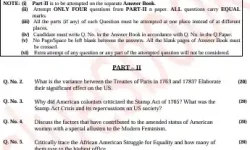
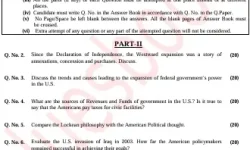
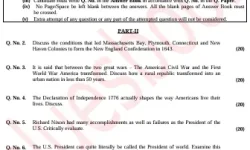
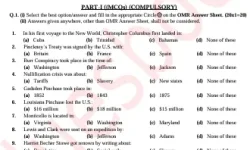
Download Political Science CSS Past Paper 2018. The CSS 2018 Political Science paper pushed candidates to compare ideology with political performance.
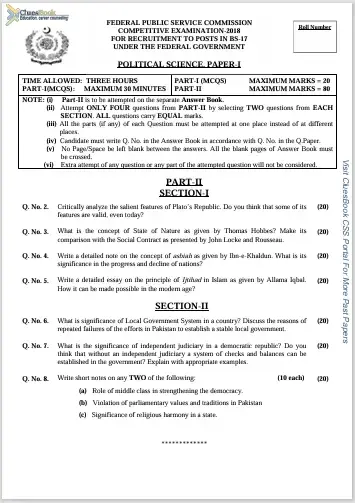
One standout question examined why political theories of equality fail in real world democracies. This post breaks it down in a clear, example led, and conversational style to help you understand what mattered.
Paper Objective
This paper was crafted to assess:
- Whether candidates could bridge theoretical knowledge with real systems
- The ability to contrast idealistic doctrines with political behaviors
- Awareness of philosophical and practical trends in both the West and the Islamic world
It was a paper that favored critical argumentation over factual regurgitation.
Topic Focus: A Balanced Mix of Doctrine and Practice
Political Ideologies & Western Thought
Questions asked candidates to:
- Define equality, liberty, and justice, then test their application in capitalist democracies
- Analyze thinkers like Plato, Aristotle, and Marx beyond summaries
- Examine how power is distributed under different state structures
Muslim Political Thought
Required a mix of classical and modern insight:
- The evolution of the Caliphate to Kingship
- Views of Shah Waliullah, Al Farabi, and Iqbal
- Role of ijtihad and ijma in shaping governance
Comparative Political Models
The paper demanded:
- Comparisons between unitary and federal systems
- Evaluation of democratic consolidation in post colonial states
- Understanding of ideological states vs. secular democracies
Politics of Pakistan
This section focused on:
- Islam and democratic structures in Pakistan
- Electoral institutions, reforms, and hurdles to true representation
- Impact of civil military imbalance and bureaucratic dominance
About the CSS
The CSS (Central Superior Services) Competitive Examination is a rigorous federal level test administered by the Federal Public Service Commission (FPSC) to select candidates for prestigious civil service roles across Pakistan. The exam’s rules and regulations, covering age limits, eligibility, subjects, and quotas, are detailed in the official CSS Rules section on the FPSC’s website.
The CSS Exam Rules, issued by FPSC Pakistan, outline eligibility criteria, age limits (21–30 years), and a maximum of three attempts for candidates. The exam includes written tests, a medical exam, a psychological assessment, and an interview. Rules also define quotas, disqualification grounds, and subject selection for a fair recruitment process.
Unique Aspects of the Political Science CSS Past Paper 2018
- Leaned more on comparative thinking than descriptive knowledge
- Introduced indirect, concept heavy questions
- Required examples from Pakistan, the Muslim world, and global democracies
Where Students Commonly Struggled
- Many failed to relate theory to examples
- Weak understanding of Muslim political thinkers in modern scenarios
- Lack of balance between philosophical insight and practical relevance
How to Prepare for Political Science CSS Past Paper 2018
- Study major political thinkers concerning current global trends
- Link doctrines like liberty and equality to Pakistan’s institutions and policies
- Practice writing argument based answers, not just summaries
- Use real world examples from across South Asia, the Middle East, and Western democracies
Essential Study Sources
- Political Theory by Andrew Heywood
- Muslim Political Thought by S.M. Shahid
- Constitutional and Political History of Pakistan by Hamid Khan
- Global Governance articles from The Economist or Foreign Affairs
- Comparative Politics by J.C. Johari
Download Section
You can download the original Political Science CSS Past Paper 2018 (PDF) from the viewer resource section. It’s unsolved and formatted for practice purposes. The CSS 2018 Political Science paper tested how well candidates could think, not just what they knew. You needed to analyze, compare, and contextualize. Those who scored well were not the most well read, but those who understood how to connect thought with reality.
For future attempts, polish your analytical style and treat every theory as a tool to decode real politics.