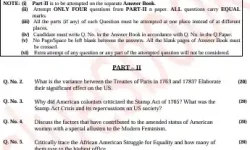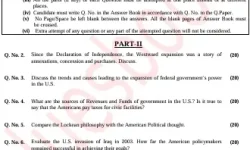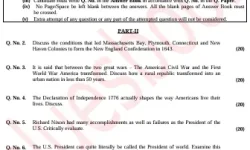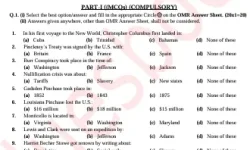

CSS Political Science Past Paper 2015
Download CSS Political Science Past Paper 2015. The 2015 CSS Political Science paper asked candidates to test theory in the real world. For instance, analyzing the relevance of the Social Contract in today’s chaotic global politics stood out. This review breaks it down clearly, with sharp examples and a practical tone for aspirants.

Strategic Focus of the Paper
Rather than relying on repetition of past patterns, the CSS Political Science Past Paper 2015 shifted gears toward:
- Deeper conceptual understanding of foundational political ideas
- Cross disciplinary integration of IR and political thought
- Application of Islamic, Western, and comparative ideologies to current challenges
Format Essentials
- Paper Marks: 100
- Duration: 3 hours
- Total Questions: 8 (4 to attempt)
- Sectioning: Divided between Political Theory and Comparative Politics
About the CSS
The CSS (Central Superior Services) Competitive Examination is a rigorous federal level test administered by the Federal Public Service Commission (FPSC) to select candidates for prestigious civil service roles across Pakistan. The exam’s rules and regulations, covering age limits, eligibility, subjects, and quotas, are detailed in the official CSS Rules section on the FPSC’s website.
The CSS Exam Rules, issued by FPSC Pakistan, outline eligibility criteria, age limits (21–30 years), and a maximum of three attempts for candidates. The exam includes written tests, a medical exam, a psychological assessment, and an interview. Rules also define quotas, disqualification grounds, and subject selection for a fair recruitment process.
CSS Political Science Past Paper 2015 Intellectual Demands
The examiner subtly forced candidates to abandon surface level memorization.
- Understanding sovereignty and the role of the nation state in a changing global order
- Dealing with Islamic political thought from a governance and legitimacy lens
- Analyzing political philosophies (Locke, Hobbes, Plato) for their relevance in today’s crises
- Applying political development theories to real-world cases, especially post colonial states.
Highlights from the Question Trends
- Can the modern state survive in the face of globalization?
- Does Machiavelli still define political realism?
- How does Islamic governance theory handle modern democracy?
- What are the real world implications of sovereignty erosion?
- Comparative models: why some democracies succeed while others fail?
Shifts in Examiner’s Intent
Unlike earlier papers, the CSS Political Science Past Paper 2015:
- Avoided straightforward narrative or historical recall
- Focused on contemporary political realities
- Required coherent integration of thinkers and real-world systems
Resources That Could Strengthen Prep
- Political Theory: An Introduction – Andrew Heywood
- Comparative Politics – Rod Hague & Martin Harrop
- Muslim Political Thought – S.M. Aslam Chaudhry
- Contemporary Political Ideologies – Lyman Tower Sargent
Common Weaknesses in Candidate Responses
- Quoting philosophers without contextual linkage
- Listing facts in comparative questions instead of analyzing
- Confusion between Islamic philosophy and Islamic history
Download Section
You can download the original CSS Political Science Past Paper 2015 (PDF) from the download link mentioned below. It’s unsolved and formatted for practice purposes.2015’s Political Science paper demanded more than knowledge; it demanded clarity, connection, and courage to critique.
Strong answers came from those who treated theory as a lens, not a list. In short, depth mattered, not detail dumping.