
CSS Economics Past Paper
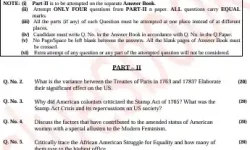
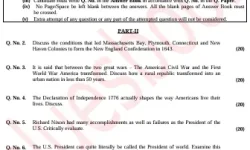
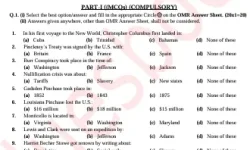
Download CSS Economics Past Papers 2014. If you’re aiming to ace the CSS Economics exam, revisiting past papers like 2014’s edition is a powerful way to understand the paper pattern, question logic, and examiner expectations.

The 2014 paper tested analytical depth, economic models, and real-world relevance, exactly the kind of thinking needed to serve in policymaking roles. Let’s break it all down, one section at a time.
Paper Structure at a Glance
CSS Economics 2014 was divided into two main components:
Paper-I (Micro & Macro Economics)
- Total Marks: 100
- Time Allowed: 3 Hours
- MCQs (Part-I): 20 Marks
- Descriptive Section (Part-II): 80 Marks (4 out of 7 questions)
Paper-II (Economy of Pakistan)
- Total Marks: 100
- MCQs (Part-I): 20 Marks
- Descriptive Section (Part-II): 80 Marks (4 out of 7 questions)
Deep Dive into Paper-I: Theoretical & Analytical Zone
This section tested your command over core economics, especially calculus-based problems and market structures.
Key Areas & Question Highlights
Q2: Profit Maximization Using Lagrange Multiplier
- A mathematical problem asking to optimize a multivariable profit function under constraint X + Y = 12.
- Required full knowledge of constrained optimization—a favorite in CSS for testing calculus.
Q3: Income and Substitution Effects in Action
- A conceptual model in consumer theory using indifference curves.
- Candidates had to prove that total price effect = substitution effect + income effect.
Q4: Monopoly vs. Perfect Competition
- Defined differences in pricing/output decisions
- Focused on short-run monopoly equilibrium with diagrams
- Perfect for showcasing your diagram skills!
Q5: Types of Costs & Marginal Cost Logic
- Explained AFC, AVC, ATC, and MC
- Discussed why MC intersects ATC at minimum point – mathematically and graphically
Q6: Monetary Base & Money Multiplier Puzzle
- Given macroeconomic values, you had to compute:
- Monetary base
- M1 money supply
- Multiplier
- Required base change for desired M1
- Great test of numerical reasoning!
Q7: Keynesian Cross Model Application
Impact of:
- Higher govt spending
- Higher taxes
- Balanced fiscal changes
- Required diagrams and a strong grip on macro modeling
Q8: Short Notes Section
Quick but insightful notes on:
- Consumer & Producer Surplus
- Compensating & Equivalent Variation
- Phillips Curve
- Ideal for scoring with conceptual clarity
Paper-II: Pakistan’s Economy Under the Lens
This part demanded applied economics knowledge, focused entirely on Pakistan’s development dynamics and policy debates.
Key Topics & Question Highlights
Q2: Features of Developing Countries like Pakistan
- Covered demographic pressure, capital shortage, underemployment, and reliance on agriculture
- A general theory question with Pakistan-centric examples
Q3: Poverty Defined & Tackled
- Explained absolute vs. relative poverty
- Asked for major poverty-reduction policies in Pakistan (e.g., BISP, Ehsaas)
Q4: Agricultural Price Policy
- Defined types: support, procurement, floor price
- Explained goals like price stability, farmer protection, food security in a developing nation
Q5: Industrial Development via Fiscal & Monetary Tools
- Discussed investment incentives, tax reforms, subsidies, credit availability
- Practical question for candidates with economic policy interest
Q6: Balance of Payment Deficit – Causes & Solutions
- Required analysis of Pakistan’s chronic BOP issues
- Proposed solutions: export-led growth, reducing import dependency, remittances
Q7: Cooperative vs Collective Farming
- Comparative analysis
- Advantages of cooperative farming and reasons for its failure in Pakistan (e.g., mismanagement, lack of awareness)
Q8: Notes on Key Issues
- Trends in Foreign Remittances – growth, role in current account
- Privatization Policy – objectives, phases, criticism
About the CSS
The CSS (Central Superior Services) Competitive Examination is a rigorous federal-level test administered by the Federal Public Service Commission (FPSC) to select candidates for prestigious civil service roles across Pakistan. The exam’s rules and regulations, covering age limits, eligibility, subjects, and quotas, are detailed in the official CSS Rules section on the FPSC’s website.
The CSS Exam Rules, issued by FPSC Pakistan, outline eligibility criteria, age limits (21–30 years), and a maximum of three attempts for candidates. The exam includes written tests, a medical exam, a psychological assessment, and an interview. Rules also define quotas, disqualification grounds, and subject selection for a fair recruitment process.
What You Learn from the 2014 Paper
- Economics is not just about theory, it’s about real-world application.
- Graphs and diagrams aren’t optional, they’re marks multipliers.
- Pakistan-specific economic knowledge is essential for Paper-II.
- You must be comfortable with math-based problems (especially in Paper-I).
- Writing style, clarity, and structure matter more than “fancy words.”
Pro Tips for Future Candidates
- Master core diagrams: IS-LM, Phillips Curve, Cost Curves, Indifference Curve
- Understand policy impacts: Taxation, spending, privatization, and inflation control
- Study real data from SBP, PBS, and Economic Surveys
- Practice calculations: Elasticity, multipliers, cost functions, monetary base
- Structure answers smartly: Intro + Diagram + Explanation + Conclusion
The CSS Economics 2014 paper reflects the real expectations from economists in bureaucracy: sharp analysis, solid theory, and applied reasoning.
Those preparing for CSS must take this paper seriously, not just to pass, but to gain command over economic logic that impacts national policy.