
Computer Science CSS Past Papers
Download the Past Paper Of Computer Science CSS. If you’re planning to take Computer Science as an optional subject in CSS, analyzing past papers is your best strategy. In this post, we’re breaking down the CSS 2019 Computer Science Paper, its structure, key topics, difficulty level, and prep strategies to help you excel.
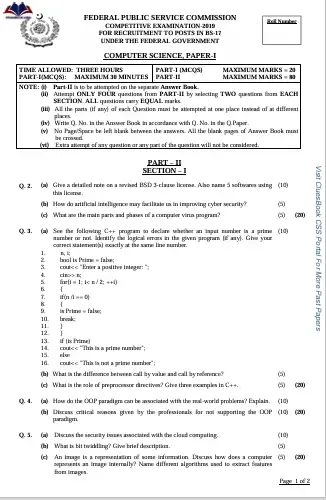
The 2019 paper tested a range of theoretical and application-based concepts, making it a balanced yet challenging exam.
Paper Pattern at a Glance
- Total Marks: 100
- Paper Format: Objective + Subjective
- Objective Part (MCQs): 20 Marks
- Subjective Part: 80 Marks (Attempt 4 out of 6 questions)
- Time Allowed: 3 Hours
Core Topics in 2019 Paper
- Here’s a quick overview of topics covered in the Past Paper of Computer Science CSS 2019:
Programming Paradigms
- Concepts of OOP vs. procedural programming
- Characteristics of high level programming languages
- Control structures and functions
Operating Systems
- Thread vs. process
- Scheduling techniques
- Deadlock and resource allocation graphs
Database Systems
- Normal forms and anomalies
- SQL query writing
- Relational database design
Software Engineering
- Agile vs. traditional SDLC
- Software testing types
- Requirements engineering
Networking & Internet Technologies
- IP addressing and subnetting
- Layers of the OSI and TCP/IP models
- HTTP vs. FTP
Theory of Computation
- Finite automata (DFA & NFA)
- Turing machine basics
- Regular expressions and grammar
About the CSS
The CSS (Central Superior Services) Competitive Examination is a rigorous federal level test administered by the Federal Public Service Commission (FPSC) to select candidates for prestigious civil service roles across Pakistan. The exam’s rules and regulations, covering age limits, eligibility, subjects, and quotas, are detailed in the official CSS Rules section on the FPSC’s website.
The CSS Exam Rules, issued by FPSC Pakistan, outline eligibility criteria, age limits (21–30 years), and a maximum of three attempts for candidates. The exam includes written tests, a medical exam, a psychological assessment, and an interview. Rules also define quotas, disqualification grounds, and subject selection for a fair recruitment process
Notable Paper Trends
- The 2019 paper focused more on conceptual clarity than deep programming or complex math.
- It offered a balanced mix of software, systems, and theory questions.
- Some questions required analytical thinking and comparisons, not rote definitions.
Ideal Study Resources
Here’s a list of recommended books and websites that align with the 2019 paper content:
Books
- “Operating System Concepts” – Silberschatz, Galvin, Gagne
- “Computer Networks” – Andrew S. Tanenbaum
- “Software Engineering” – Ian Sommerville
- “Database System Concepts” – Korth & Silberschatz
- “Theory of Automata” – Peter Linz
- “Programming in C++” – Robert Lafore
Websites
- NPTEL Computer Science lectures
- GeeksforGeeks
- Khan Academy (Discrete Mathematics)
- W3Schools (SQL and Web Technologies)
- JavaTpoint
Pro Study Tips for CSS Aspirants
- Understand how topics relate across fields like OS, networks, and programming.
- Draw clear, labeled diagrams where applicable (like automata, memory models).
- Use a structured answer format with headings and bullet points.
- Don’t ignore the objective section; revise basic concepts and short facts.
Download Section
The Past Paper of Computer Science CSS 2019 (PDF) is available to download from the link below. Make sure to download and attempt it under timed conditions for the best results. The Past Paper of Computer Science CSS offers insight into how FPSC evaluates both theoretical depth and applied knowledge. By carefully analyzing past trends, preparing conceptually, and practicing regularly, even non CS students can score competitively in this subject.
Stay focused on fundamentals, improve your writing technique, and revise smartly to ensure success.