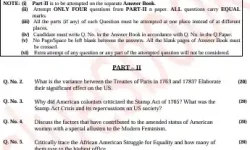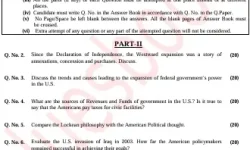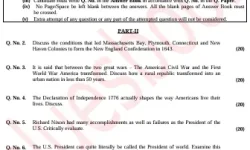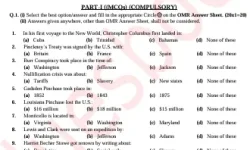

Download Past Papers of European History CSS Paper 2018 PDF with complete analysis, key topics, examiner’s intent, and preparation tips. Ideal for CSS aspirants choosing European History as an optional subject.
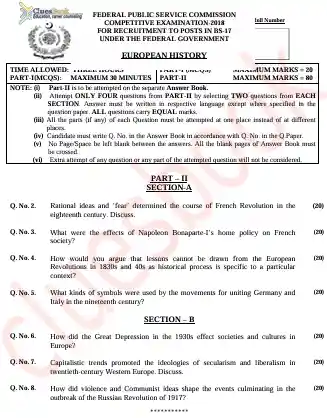
The CSS European History paper 2018 tested candidates on both foundational revolutions of Europe and the modern developments of the 20th century. This paper was carefully designed to evaluate not just factual knowledge but also the ability to present analytical and comparative arguments. Reviewing this past paper helps aspirants build a clear strategy for tackling future exams.
Paper Composition
The European History CSS exam 2018 followed the classic two-part layout:
- Part I: 20 multiple-choice questions covering treaties, leaders, revolutions, and important dates.
- Part II: Six long questions, from which candidates had to attempt four.
This ensured a balanced evaluation between factual precision and essay-style analytical writing.
About the CSS
The CSS (Central Superior Services) Competitive Examination is a rigorous federal-level test administered by the Federal Public Service Commission (FPSC) to select candidates for prestigious civil service roles across Pakistan. The exam’s rules and regulations, covering age limits, eligibility, subjects, and quotas, are detailed in the official CSS Rules section on the FPSC’s website.
The CSS Exam Rules, issued by FPSC Pakistan, outline eligibility criteria, age limits (21–30 years), and a maximum of three attempts for candidates. The exam includes written tests, a medical exam, a psychological assessment, and an interview. Rules also define quotas, disqualification grounds, and subject selection for a fair recruitment process.
Major Question Areas in 2018 Paper
The CSS European History previous year questions (2018) revolved around some recurring yet analytically framed topics:
- French Revolution: Causes and significance in reshaping European thought.
- Napoleon Bonaparte: His reforms, wars, and ultimate fall.
- Congress of Vienna: Diplomatic settlement and European balance of power.
- Unifications: Italy and Germany with emphasis on leaders and foreign influence.
- World Wars: Origins, course, and post-war consequences.
- Cold War and European Integration: Ideological clashes and institutions.
Examiner’s Perspective
The CSS European History exam paper analysis 2018 reflected these priorities:
- Focus on long-term vs short-term causes of events.
- Testing ability to compare European revolutions and wars.
- Emphasis on leaders’ roles vs broader forces like nationalism and industrialization.
- Questions encouraging connections between European and global history.
Past Papers of European History CSS Paper 2018 – Key Lessons for Preparation
To prepare well for European History CSS exam past papers, candidates should:
- Memorize chronological sequences of wars and revolutions.
- Prepare comparative essays (e.g., Napoleon vs. Congress of Vienna impact).
- Study historians’ perspectives for value addition.
- Review CSS European History solved past papers for writing practice.
Download Past Papers of European History CSS Paper 2018
The original CSS European History past paper 2018 (PDF) is available in the link below. It is unsolved and formatted for candidates who wish to practice real exam-style questions. The past papers of European History CSS paper 2018 prove that the examiner values contextual depth, analytical reasoning, and comparative understanding of events.
Preparing through past papers, maps, and historians’ viewpoints gives candidates a strong chance of scoring well.